
Solid-state drives (SSD) are already much faster than traditional hard drives (HDD), but that doesn’t mean they always run at peak performance. You can try many tweaks to improve your SSD speed, but if your Windows 11 seems a little slow over the weekend or after a lot of file deletion, an overlooked SSD setting could be the cause.
The setting in question is trimAnd while it’s enabled by default, how often it runs can make a difference in some situations.
What is SSD trim?
SSD TRIM is a command used by the operating system to tell the SSD which data blocks are no longer needed. When you delete a file in Windows, the data is not erased immediately. Instead, the operating system simply marks the space as no longer in use.
Without TRIM, an SSD would have to scan itself to figure out which blocks contain valid data and which do not, a slow and inefficient process. When TRIM is enabled, Windows actively informs the SSD about which blocks are safe to clear.
The SSD then uses this information during a background process called garbage collectionWhere it erases unused blocks and prepares them for new data. This helps write data to the drive faster, reduces unnecessary operations, and can also extend the lifespan of the SSD.
Why does TRIM timing matter?
Although TRIM is automatically enabled on most modern Windows systems, it usually runs weekly schedule. This means that if you delete large files on Monday, the SSD can’t actually reclaim that space until the scheduled optimization runs a few days later.
During that time, the drive still considers the space internally occupied, even though Windows shows it as free. If your SSD is already close to full, this delay can affect write performance and responsiveness.
In practice, your SSD may perform better immediately after a TRIM cycle and gradually degrade until the next cycle runs.
When does changing the Windows SSD TRIM schedule help?
For many Windows users, the default weekly schedule is just fine. If you have a lot of free space on your SSD and use it for everyday tasks like browsing, office work or gaming, you’re unlikely to notice a difference.
However, adjusting the TRIM frequency may help in specific scenarios:
- with SSDs very limited free space
- system that Write and delete large files frequently
- like workload Video editing, databases, or virtual machines
- Users who regularly clean files to regain performance
In these cases, running TRIM more often ensures that free space is reclaimed sooner indeed, keeping the SSD closer to peak efficiency throughout the week.
How to change TRIM schedule in Windows?
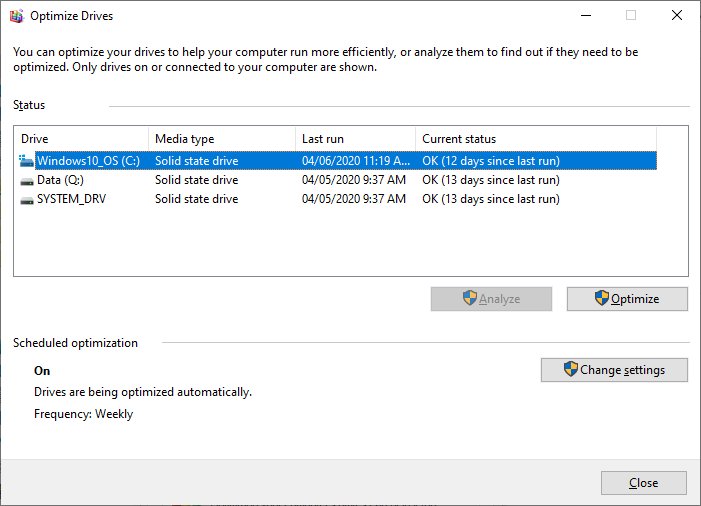
Adjusting the TRIM schedule is simple and does not require third-party tools.
- open start menu Find more optimize drive
- choose Defragment and optimize the drive
- Click change settings Under Scheduled Adaptation
- Choose a new frequency (daily, weekly or monthly)
- Save your changes
set optimization to daily Won’t harm modern SSDs and can help keep performance more consistent if your workload benefits from frequent cleaning.
Windows 11 slow SSD: is TRIM worth scheduling?
For most Windows 11 users, changing the TRIM schedule will not dramatically increase SSD speed. Modern solid-state drives are already highly optimized, and Windows handles them well out of the box.
But if you’re the kind of user who likes to squeeze every bit of performance out of your hardware, or if your SSD is constantly in heavy use, adjusting this one default setting can help keep things running smoothly.
It’s a small change, but under the right circumstances, it makes a measurable difference.